Breast Enlargement Education
Breast Enlargement: A Complete Guide to Surgical and Non-Surgical Options
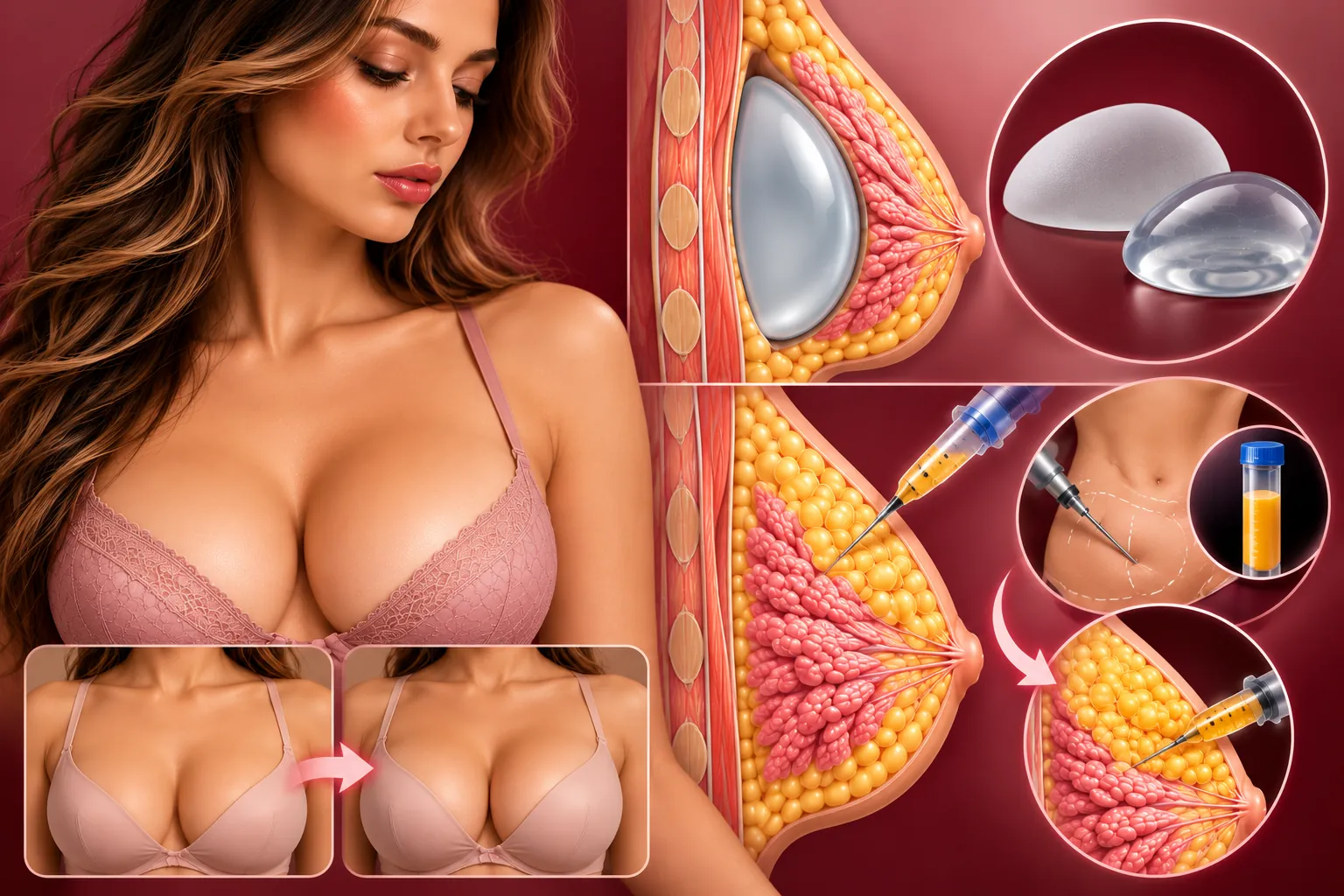
An evidence-aware guide to surgical and non-surgical breast enlargement options, limitations, safety and questions to ask.
What breast enlargement means
Breast enlargement can mean a change in volume, shape, projection, symmetry or simply the appearance of the chest in clothing. Natural breast size and shape vary with genetics, hormones, body weight, pregnancy, ageing and the balance of glandular and fatty tissue. A useful first step is defining the change you hope to see, because a procedure that changes projection is not automatically a procedure that creates durable volume.Surgical options
Implant augmentation places a regulated medical device through an operation; silicone-gel and saline implants have different product characteristics, but neither should be described as a lifetime device. Fat transfer uses liposuction to collect and process a person’s own fat before grafting it to the breast. It can create a more modest volume change, but retained volume varies and future imaging should take the history of grafting into account.Non-surgical claims and limits
A supportive bra, padding, posture and styling can change appearance temporarily without changing breast tissue. Exercise strengthens the pectoral muscles beneath the breast but does not selectively grow breast tissue. Creams, supplements and massage have not shown a reliable, lasting increase in breast volume. Regulators warn against using injectable fillers or silicone to enlarge breasts.Results, longevity, risks and cost
Healing, sensation, scars, shape and longevity vary. Implant surgery can involve capsular contracture, rupture, infection, bleeding, changes in sensation and later operations. Fat transfer has its own risks, including uneven retention and fat necrosis. Pricing depends on clinician credentials, facility, anaesthesia, device or procedure choice, aftercare and the realistic possibility of future treatment; a low headline price is not a complete safety assessment.Questions for a surgeon
Ask what is being proposed, why it fits your anatomy and goals, the product name and regulatory status, alternatives including doing nothing, the full cost, recovery plan, complication management, and expected long-term monitoring. A qualified clinician should welcome time to decide.Making sense of the information
Start with the exact claim
When reading about breast enlargement, separate a statement about appearance from a statement about anatomy, volume, safety or durability. Ask what was measured, for how long, in whom, and whether the same product, technique and body area are being discussed. A dramatic marketing image cannot answer those questions. This distinction is especially important where a procedure is described with broad terms such as “natural”, “non-invasive” or “advanced”.
Plan for the whole decision
A procedure is more than the operation itself. Consider consultation time, health assessment, written consent, travel, support at home, follow-up, time away from work and the possibility that further treatment may be needed. Decisions made without room for questions, reflection or a second opinion deserve particular caution.
Use reliable sources
Regulator guidance, product instructions and peer-reviewed research answer different questions. A regulator may describe known risks and approved uses; a professional body may explain usual practice; a study may have limits in size, follow-up or relevance. No single source can decide individual suitability. If a claim cannot be traced to a credible source or a clinician cannot explain it plainly, treat that as a reason to pause.
Keep expectations realistic
People vary in anatomy, healing, scar formation, sensation, priorities and tolerance for risk. Even a technically uncomplicated procedure may involve discomfort, swelling, uncertainty during healing or a result that differs from an imagined picture. It is reasonable to ask what can go wrong, how it would be managed, and what the alternative is if the hoped-for change is not achieved.
Protect your independence
Take notes, request written information and discuss the decision with someone you trust if that feels helpful. Be cautious about limited-time discounts, guaranteed results, pressure to pay a deposit immediately, or vague answers about who performs aftercare. Choosing no treatment, or postponing a decision, remains an appropriate option.
Key takeaways
- Individual assessment matters more than generic online claims.
- Evidence, safety and realistic expectations should guide decisions.
- Taking time and choosing no treatment are valid options.
Sources and further reading
Related articles
Frequently asked questions
No. It is general education and cannot assess your health, anatomy, goals or suitability.
No. Results, risks, healing and the need for future care vary between individuals.
Discuss individual questions with an appropriately qualified, registered clinician.
Use the linked regulator and professional-body sources, and ask for product-specific information.
Take time, compare reliable information, and do not proceed under pressure.
Use information to prepare your questions
This educational article cannot assess individual suitability. Discuss any treatment decision with an appropriately qualified clinician.