Non-Surgical Breast Enlargement
Return to the full category guide.
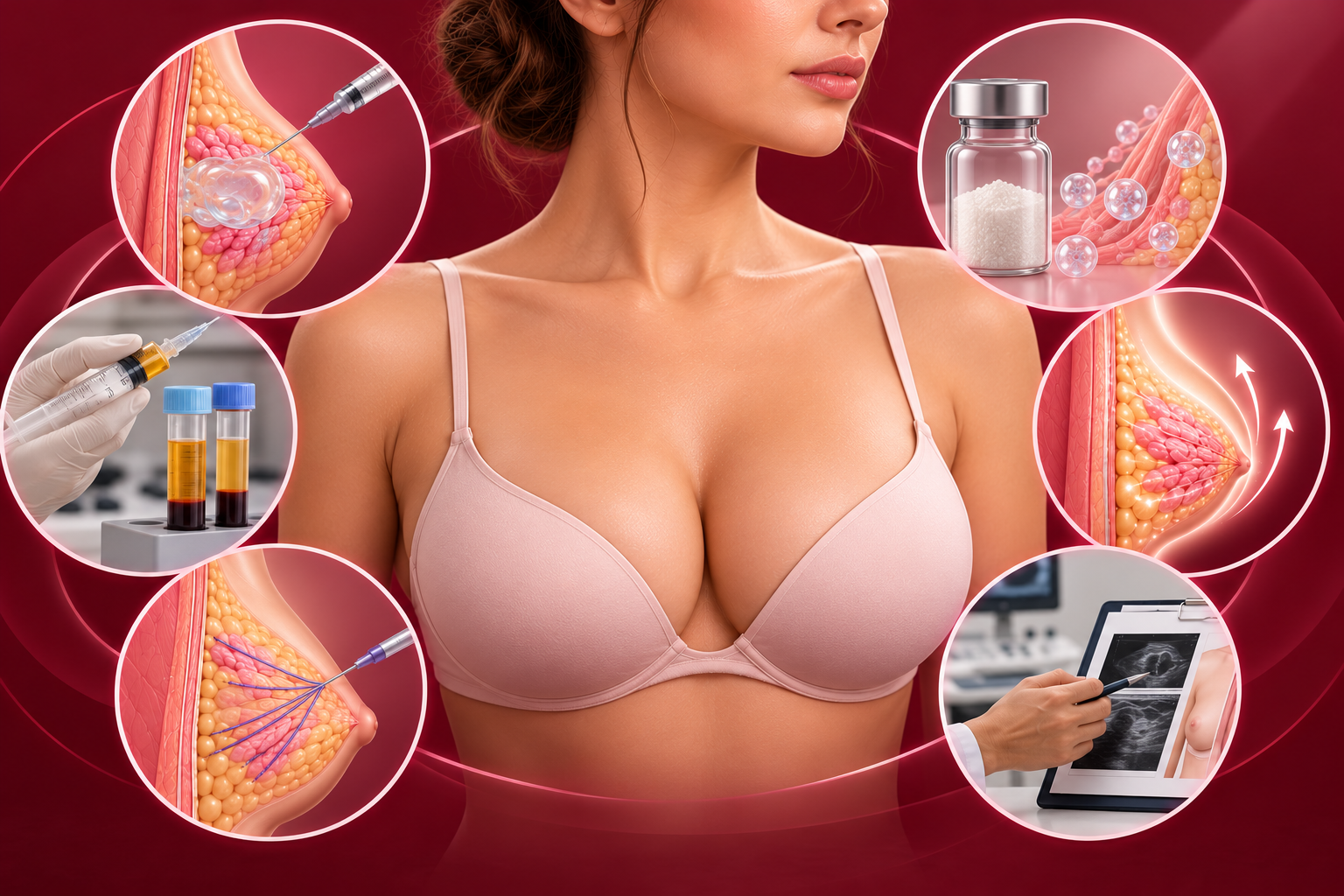
None of these myths is harmless. Each can lead someone to spend money, delay a proper assessment or accept a risk they did not understand.
Non-invasive does not equal risk-free. Injections and threads can cause infection, lumps and tissue damage. See non-surgical breast enhancement.
Fillers approved for the face are not approved for breast enlargement. Safety and effectiveness for that use have not been established.
Threads are not designed to add significant volume. At most, some may cause a small, often temporary, change in appearance. See breast threads.
PRP is used in some medical settings, but there is no robust evidence that it enlarges breasts. See PRP and breast enhancement.
Research is early and not an established treatment for enlargement. See stem cells and regenerative medicine.
There is no reliable evidence of lasting enlargement. See our page on creams, pills and massage.
Reviews and photos are not evidence. Ask for the published research and the product’s approval status.
Be sceptical of any treatment that promises large, quick and lasting enlargement without surgery. Ask what the product is approved for, what evidence exists and what can go wrong.
Continue reading
Return to the full category guide.
Candidacy, risks and when to seek medical help.
Study findings, limitations and original publications.
The evidence guide and method scorecard.
Approved uses and serious safety concerns.
What threads can and cannot do.