Non-Surgical Breast Enlargement
Return to the full category guide.
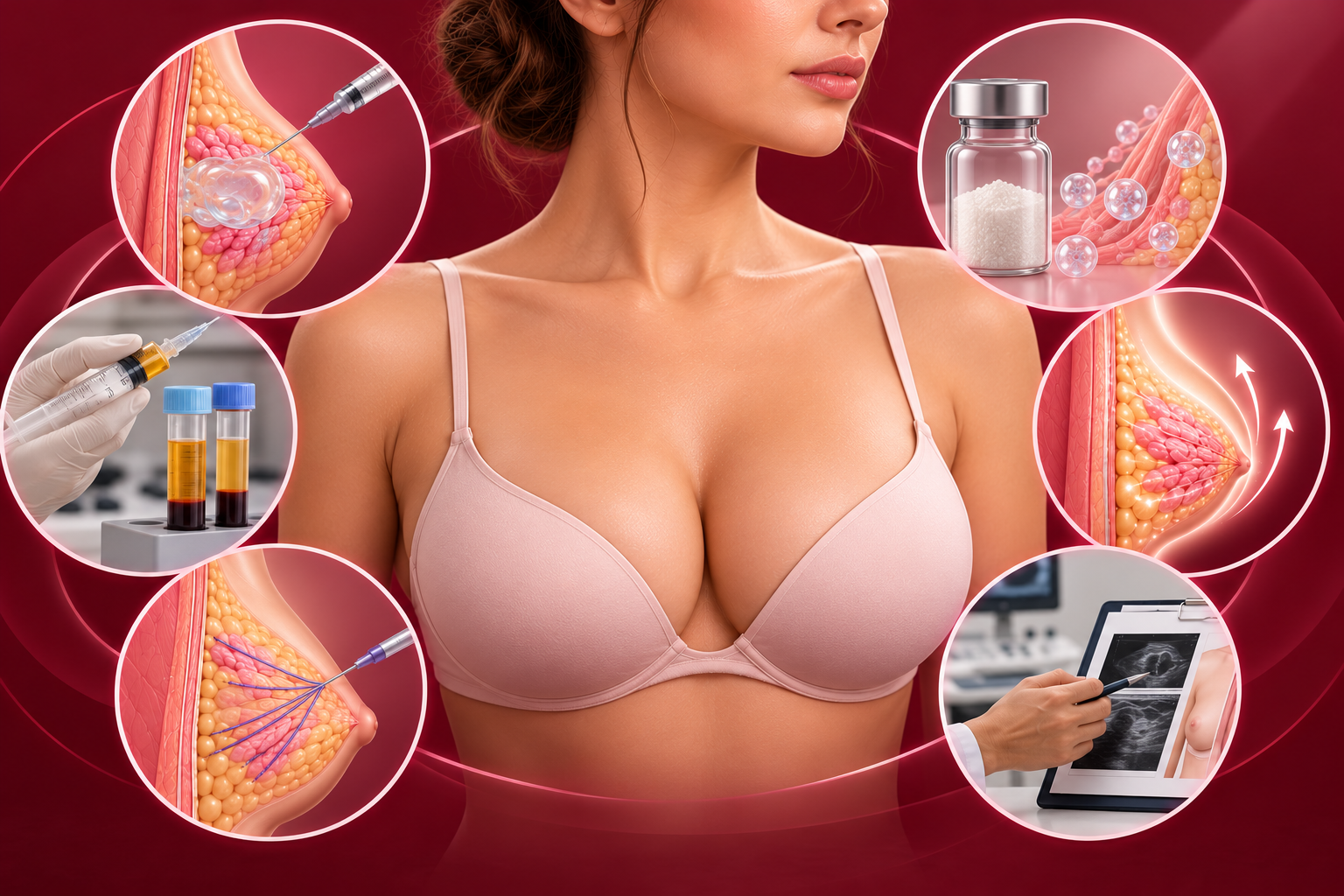
Claims about non-surgical breast treatments often cite studies, but studies vary widely in quality. This page is part of our guide to non-surgical breast enhancement.
A treatment studied for the face or skin does not automatically work or stay safe in the breast. Anatomy, tissue behaviour and the consequences of complications differ.
Our research library and references page link to original sources. Read the abstract and the limitations, not only the conclusion. If a clinic cannot point to independent evidence for breast use, that absence is important information.
Look for independent, controlled, long-term evidence in the breast itself. Absence of it is information too.
Continue reading
Return to the full category guide.
Candidacy, risks and when to seek medical help.
Study findings, limitations and original publications.
The parent guide to the evidence and safety of each option.
External source material for the topics discussed here.