Non-Surgical Breast Enlargement
Return to the full category guide.
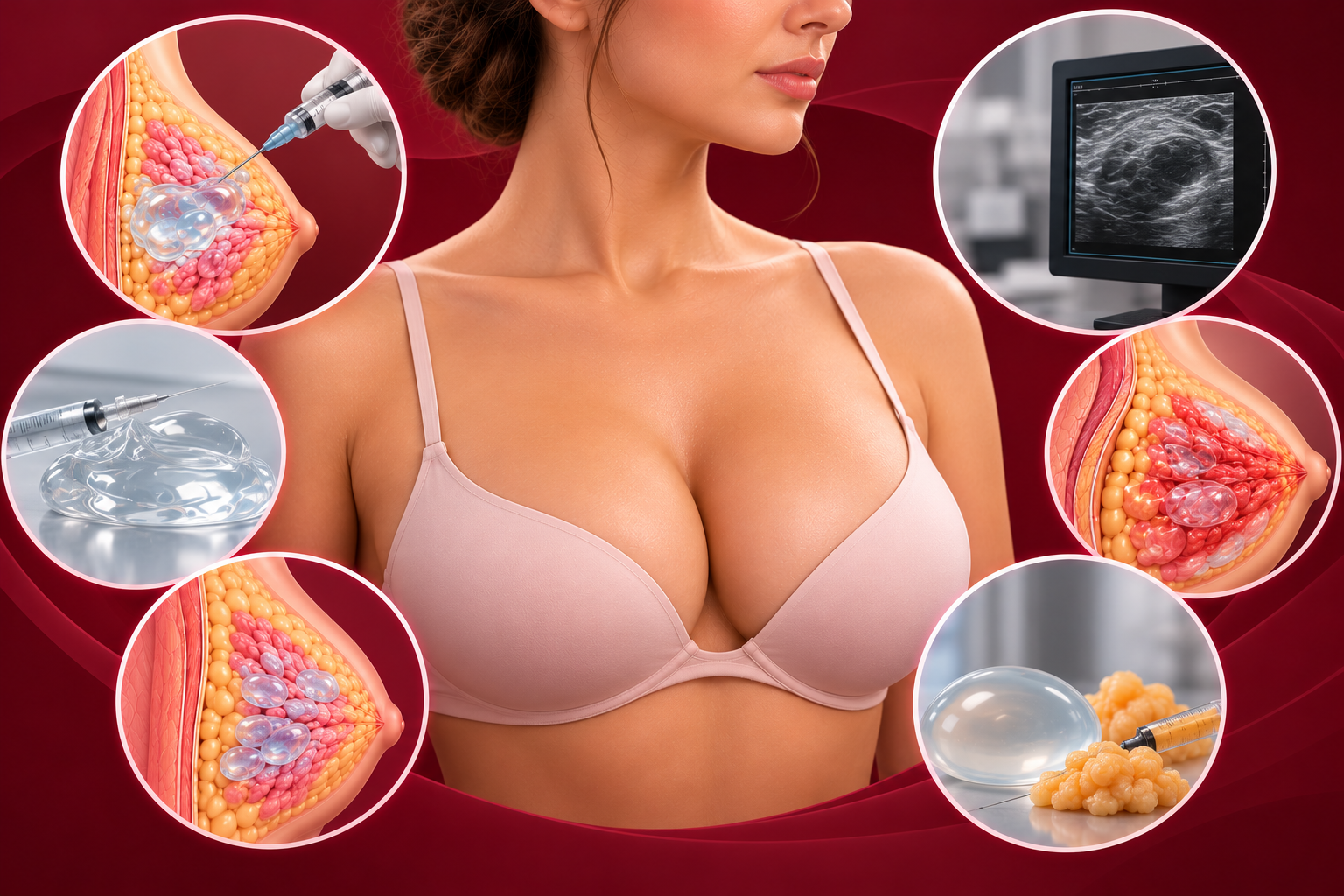
Some clinics, and especially unlicensed providers, offer injections to enlarge breasts. Products have included liquid silicone, paraffin, oils and cosmetic fillers designed for the face. These are not the same as regulated breast implants.
A breast is a large, soft organ with glandular tissue, fat and a rich blood supply. Material injected there can spread, form clumps, trigger inflammation or be hard to locate later. Unlike an implant, it cannot simply be removed as a single object.
Some dermal fillers are approved for specific areas such as the face. That approval does not extend to the breast. Using a product outside its approved indication means its safety in that site has not been established. See breast fillers.
See a doctor with relevant experience. Do not try to squeeze, drain or remove lumps yourself. Tell any imaging team about the injections. Seek urgent care for fever, spreading redness, severe pain or rapidly changing lumps. Information on removal is on our breast filler removal page.
Choose approaches with a clear regulatory status, a known product and a qualified clinician. Be cautious of anything that sounds quick and easy, especially when the product name is vague.
Removal can be difficult and sometimes incomplete. The material may have spread through tissue, and surgery carries its own risks. Early assessment by an experienced clinician is important.
No. A breast implant has a solid silicone shell and contains cohesive gel or saline. Liquid injectable silicone is a different product and must not be used as a substitute.
Continue reading
Return to the full category guide.
Candidacy, risks and when to seek medical help.
Study findings, limitations and original publications.
Approved uses, regulatory warnings and alternatives.
What removal involves and why it can be complex.