Non-Surgical Breast Enlargement
Return to the full category guide.
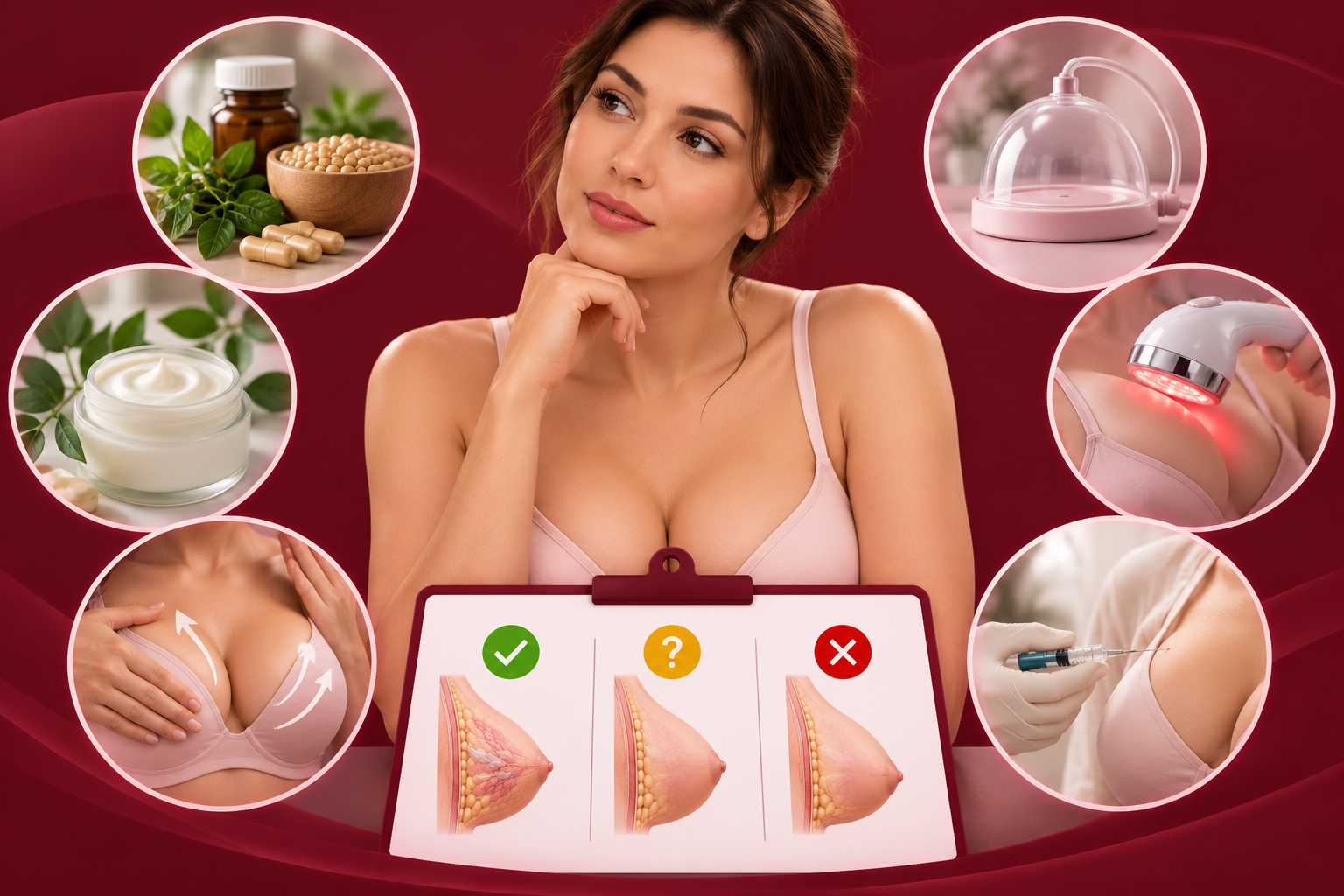
Breasts are made of glandular tissue and fat, so body weight affects them. This page is part of our guide to breast enlargement without surgery.
Gaining weight often increases breast volume because fat is stored in the breast. But fat is also gained elsewhere, and where it goes is largely determined by genetics and hormones. You cannot choose to gain weight only in the breasts.
Losing weight often reduces breast size, particularly in people whose breasts are mostly fat. Skin may also lose volume and elasticity, leading to a change in shape or sagging.
Repeated weight gain and loss can stretch skin and affect breast shape. Rapid change can leave the skin loose.
A doctor or dietitian can support healthy change. Surgeons often prefer a stable weight before breast surgery, because results are more predictable. If you are considering an operation, read about fat transfer and the wider surgical options before deciding.
Chest exercises do not increase breast tissue but can affect the look of the upper chest. Intense exercise combined with low body fat may reduce breast size.
If you may gain or lose weight soon, discuss timing with your surgeon. Stable weight is easier to plan around than a moving target.
Weight affects breast size in unpredictable ways, and it is not a safe tool for targeted enlargement.
Continue reading
Return to the full category guide.
Candidacy, risks and when to seek medical help.
Study findings, limitations and original publications.
The parent evidence guide.
The other main influence on natural size.
A surgical option that uses your own fat.