Surgical Breast Enlargement
Return to the full category guide.
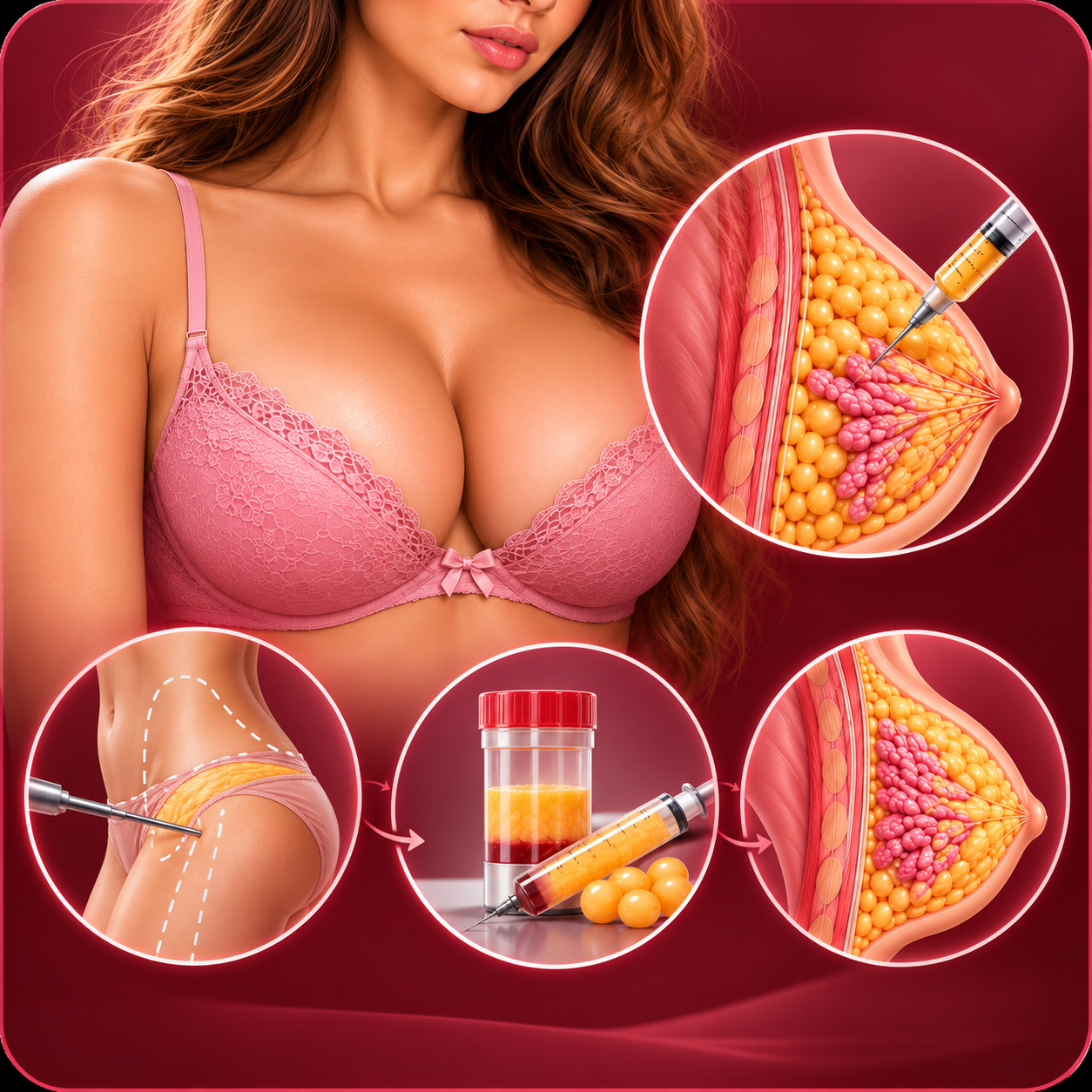
Fat transfer uses your own fat, collected by liposuction, processed and injected into the breasts. A common question is how much of that fat remains.
Transferred fat needs a blood supply to survive. Some fat cells establish one; others do not and are absorbed by the body. Published studies report a wide range of retention, and individual results are unpredictable. Be wary of any provider promising a fixed percentage.
Fat transfer typically offers a modest, natural-feeling increase rather than a dramatic one. Some people need more than one session to reach their goal.
These include uneven results, fat necrosis (areas of hardened fat), oil cysts and calcifications that can show up on breast imaging, infection and the usual risks of liposuction. Tell any imaging team you have had fat transfer.
People with little donor fat, or who want a large increase in size, may find it does not meet their goals. Your surgeon should explain this honestly.
Fat transfer can be a good option for modest change, but expectations should be set around variability. See fat transfer breast augmentation.
Continue reading
Return to the full category guide.
Candidacy, risks and when to seek medical help.
Study findings, limitations and original publications.
The procedure, recovery and risks.
Fat transfer against implants and other approaches.