Surgical Breast Enlargement
Return to the full category guide.
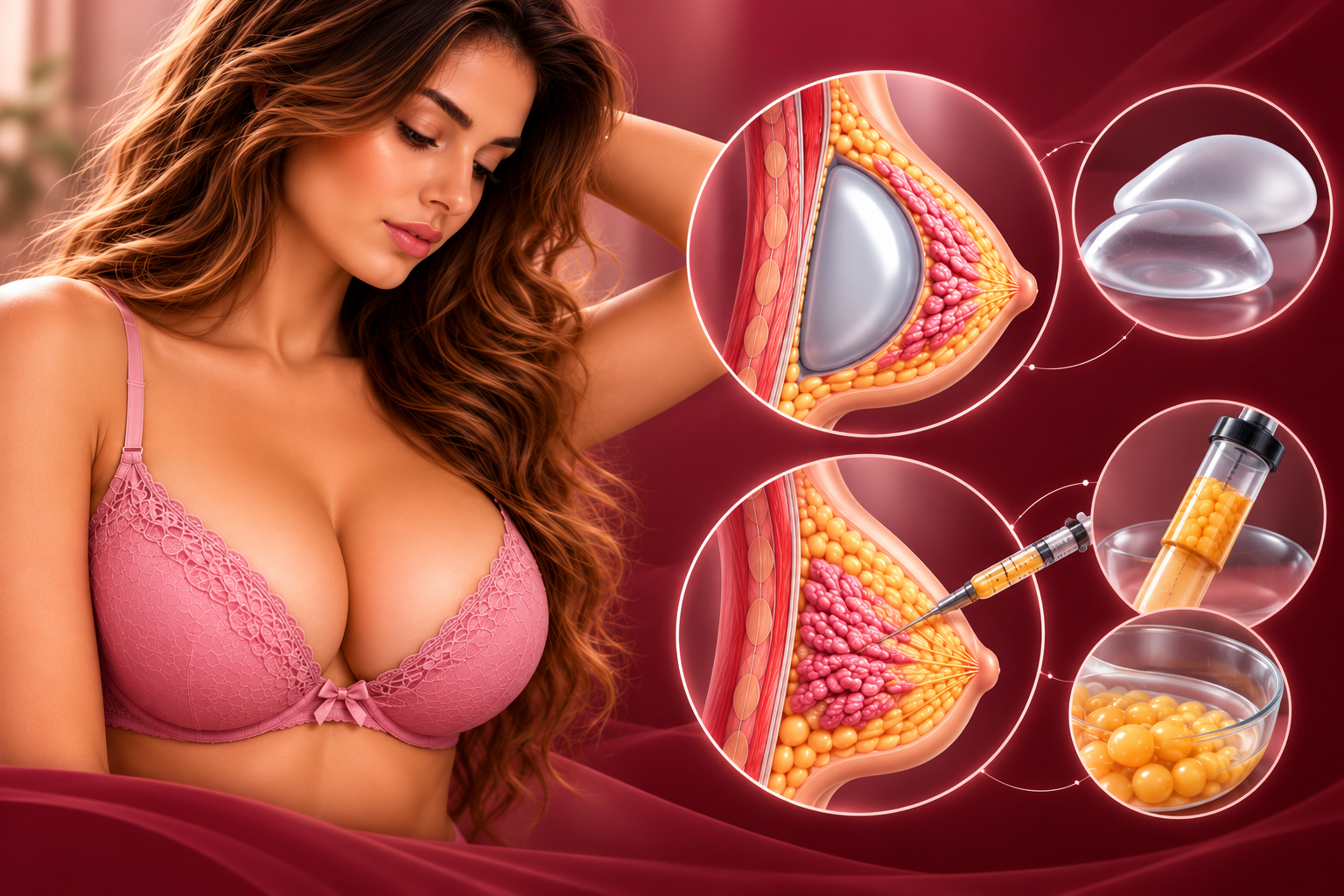
Many people start with a cup size in mind, but cup sizes vary between brands and countries. Implants are measured in cubic centimetres (cc), and the same volume looks different on different bodies.
Larger implants place more stretch and weight on tissues. They can increase the chance of visible rippling, thinning of tissue, sagging over time and further surgery. A size that looks good in a photograph may not suit your tissue.
Surgeons may use sizers placed inside a bra, measurements of the breast base and 3D simulations. Treat simulations as a rough guide only, because they cannot predict how your tissues will heal and settle.
Swelling means that the size you see in the first weeks is not the final result. Implants also settle over time. Ask when your surgeon expects the result to stabilise and what changes are normal.
The best size is the one your tissues can support with the lowest long-term risk. A qualified surgeon can help you estimate that, but no simulation can guarantee a result. See breast augmentation.
Continue reading
Return to the full category guide.
Candidacy, risks and when to seek medical help.
Study findings, limitations and original publications.
How size, profile and base width interact.
Planning, surgery and recovery.
What revision can and cannot change.