Surgical Breast Enlargement
Return to the full category guide.
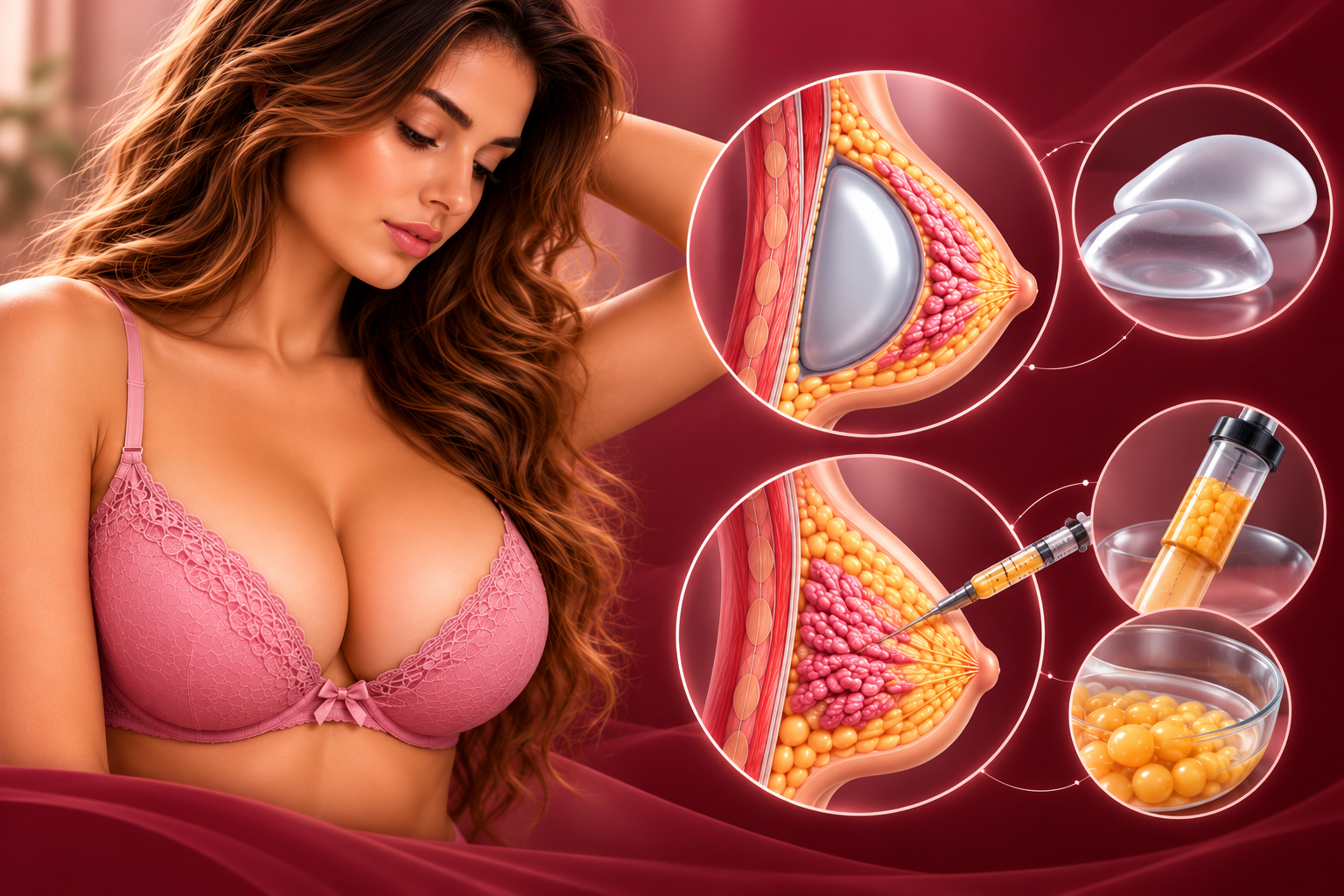
Many people considering augmentation also plan to have children. The two interact in a few ways, and there is no single timeline that suits everyone.
Many people with implants breastfeed successfully, but it is not guaranteed. Factors include the incision, the implant position, whether nerves or ducts were affected, and your breast tissue before surgery. Incisions around the nipple may carry a higher chance of affecting milk supply. A person who has had implants may also have had limited glandular tissue to begin with.
Current evidence has not shown that silicone from intact implants passes into milk at harmful levels. If you have concerns, discuss them with your doctor.
Breast size and shape change during pregnancy and breastfeeding, with or without implants. Skin stretches, and breasts may look different afterwards. Implants do not prevent these changes, and surgery before pregnancy may mean a lift, revision or other procedure later.
Some surgeons recommend waiting until you have finished having children. Others operate earlier if the person understands that further surgery may be needed. Fat transfer and implants have different considerations, which you can read about on our fat transfer page.
Elective breast surgery is generally not done during pregnancy or while breastfeeding. Surgeons usually advise waiting some months after you stop breastfeeding.
If pregnancy is likely in the near future, discuss timing openly with your surgeon before deciding. See breast augmentation.
Continue reading
Return to the full category guide.
Candidacy, risks and when to seek medical help.
Study findings, limitations and original publications.
Planning, surgery and recovery.
A different set of pregnancy considerations.
How a lift addresses shape after pregnancy.