Surgical Breast Enlargement
Return to the full category guide.
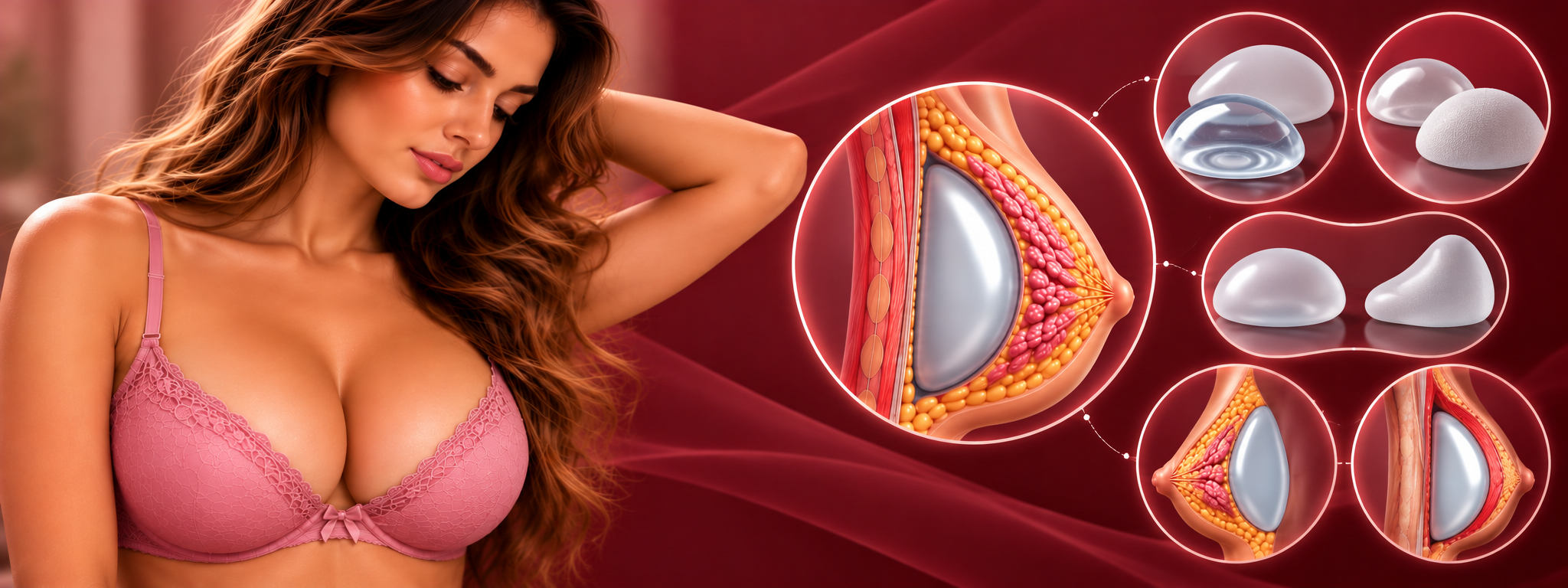
Breast implants have a silicone elastomer shell. The difference lies in what is inside. Neither type is automatically better, and the right choice depends on your tissue, preferences and willingness to follow long-term monitoring.
Saline implants are filled with sterile salt water. They can sometimes be filled during surgery, which may allow a smaller incision. If the shell leaks, the implant usually deflates visibly over a short time and the body absorbs the saline. Some people find saline implants feel firmer or show more rippling, especially with thin tissue coverage.
Silicone gel implants are filled with cohesive silicone gel. Many people find the feel closer to natural breast tissue. If the shell is damaged, the gel often stays in place, so a rupture can go unnoticed. This is why regulators such as the US FDA recommend periodic imaging for silicone gel implants. FDA guidance suggests a first MRI scan around five to six years after surgery and then every two to three years. Ask your surgeon what is recommended where you live.
Side by side
| Consideration | Saline | Silicone gel |
|---|---|---|
| Feel | Can feel firmer | Often softer |
| Rupture | Usually visible deflation | May be silent |
| Monitoring | Clinical observation | Imaging may be recommended |
| Incision | Can be smaller | Typically larger |
| Rippling | May be more noticeable | Less likely, but not eliminated |
Individual anatomy, implant surface and placement also affect feel and appearance.
Implant labelling can set minimum ages. In the United States, saline implants are labelled for adults aged 18 and over and silicone gel implants for those aged 22 and over for cosmetic augmentation. Rules vary by country, so check the labelling and regulatory status where you are treated.
Neither type is better for everyone. The right choice depends on your anatomy, preferences and willingness to follow long-term monitoring. See the breast implants guide and breast implant safety.
Continue reading
Return to the full category guide.
Candidacy, risks and when to seek medical help.
Study findings, limitations and original publications.
The wider guide to implant choices, surfaces and incisions.
Replacement, revision and long-term monitoring.
Rupture, contracture, ALCL and follow-up.