Non-Surgical Breast Enlargement
Return to the full category guide.
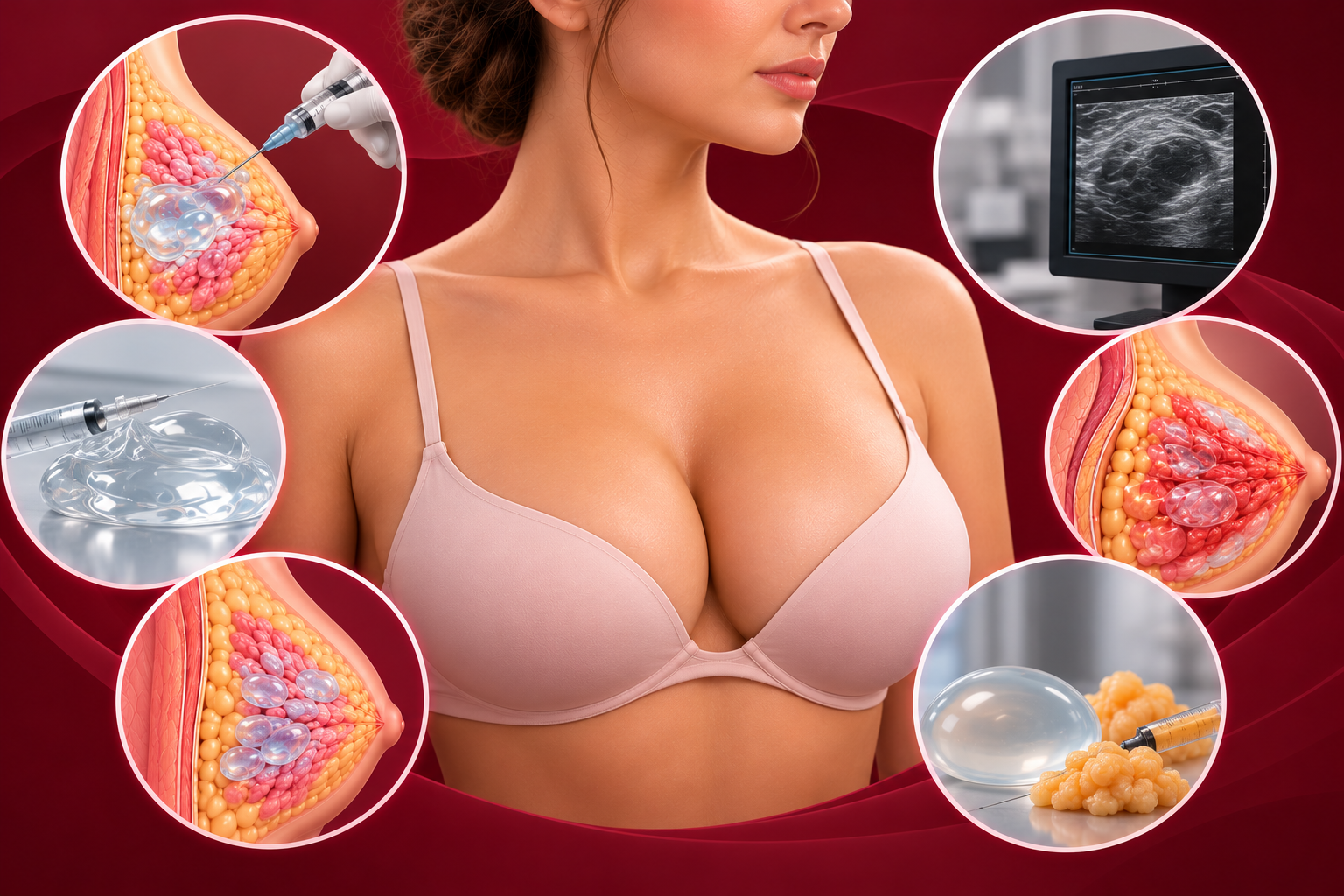
Complications range from mild and short-lived to serious and long-lasting. This page is part of our guide to breast fillers.
Bruising, swelling, tenderness and redness are common after any injection and usually settle within days.
Severe pain, skin turning pale, blue or dark, spreading redness, fever, rapidly growing lumps or discharge.
Read more about breast filler removal.
Keep a record of what was injected, tell all clinicians, and report symptoms early. If you do not know the product, say so; imaging and tissue sampling may help identify it.
Most problems are better managed when caught early.
Continue reading
Return to the full category guide.
Candidacy, risks and when to seek medical help.
Study findings, limitations and original publications.
The parent guide to evidence and safety.
Imaging effects and what to tell the radiologist.
What removal involves and why it can be difficult.