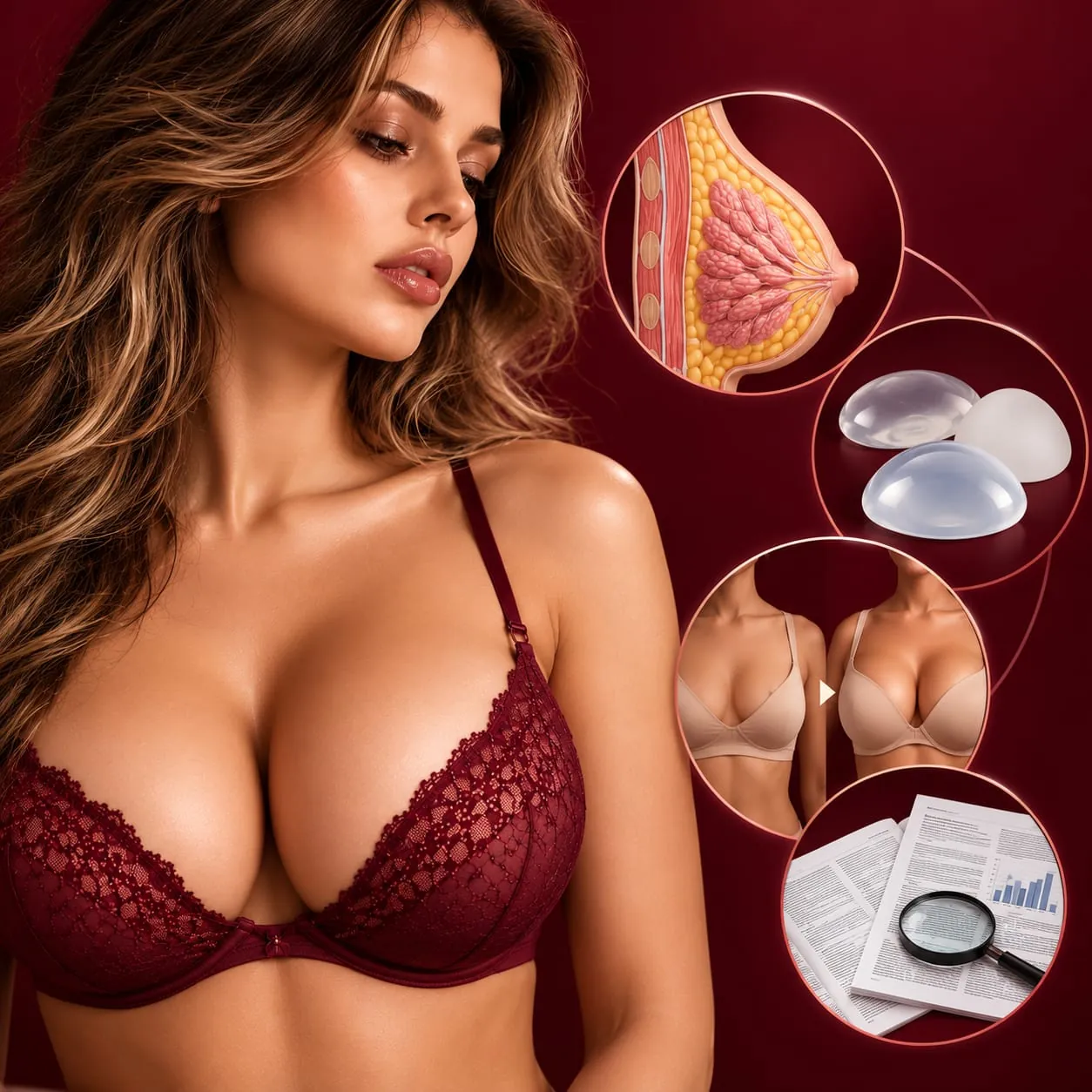
Educational illustration for Evaluating PRP Breast Claims: Questions, Red Flags and Better Starting Points

Non-Surgical Breast Enlargement

Evaluating PRP Breast Claims: Questions, Red Flags and Better Starting Points

PRP is widely marketed for breast enhancement, often with strong language. A few checks can help.

PRP is widely marketed for breast enhancement, often with strong language. A few checks can help. This page is part of our guide to PRP and breast enhancement.

Claims to be cautious about

  • "Natural breast enlargement" or "grows new tissue"
  • "Non-surgical breast lift" with no explanation of what changes
  • A specific cup-size increase
  • "Permanent" results
  • "No risk" because it uses your own blood
  • Before-and-after photos with no information about timing, lighting or other treatments

Questions to put to the provider

  • What exactly will PRP do in my breast?
  • What published evidence is there for breast use, and how strong is it?
  • How is the result measured and at what time?
  • What proportion of patients benefit?
  • What are the risks and costs, including repeat sessions?
  • Is there an alternative that has better evidence?

Red flags

  • Reluctance to cite studies
  • Pressure to pay for multiple sessions upfront
  • Treatment outside a medical facility
  • Unclear training of the person injecting
  • No consent form or aftercare plan

What a fair answer might sound like

"PRP is used in some medical settings. For the breast, there is no strong evidence that it increases volume. Some people may notice a small change in skin quality, but this is uncertain."

Better starting points

  • A consultation with a registered, appropriately qualified clinician, preferably one experienced with breast surgery as well as non-surgical options
  • Our research library and references
  • A second opinion

Key takeaway

The more dramatic and certain the promise, the more reason to ask for the evidence.

Continue reading

Related education