Surgical Breast Enlargement
Return to the full category guide.
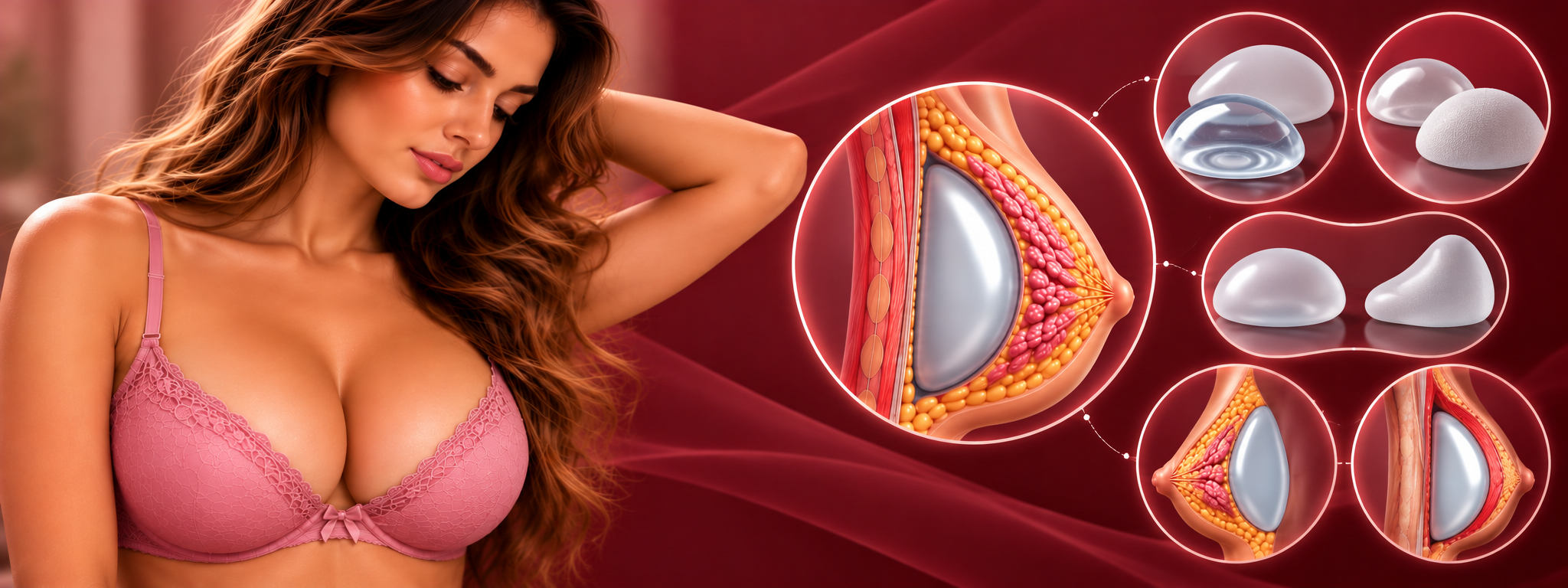
Implant shape is a design choice, not a quality ranking. The right shape depends on your chest wall, the amount of soft tissue covering the implant and the look you want.
Round implants are uniformly rounded, with fullness at the top and bottom. If they rotate slightly, the shape usually looks the same. They are available in smooth surfaces and some textured options.
Anatomical implants are shaped with a gentle slope at the top and more volume at the bottom, resembling a natural breast. Because they have a defined shape, rotation can change the look of the breast. They have historically been textured to reduce rotation.
Some textured implants have been linked to a rare lymphoma called BIA-ALCL. Regulators in several countries have restricted certain textured implants. Ask your surgeon specifically about the surface texture of any implant proposed, and read our page on BIA-ALCL and breast implant illness.
This depends on your chest shape and tissue. Many people with enough soft-tissue coverage get a natural result with round implants, because the breast tissue itself shapes the upper slope. Very thin tissue may show the implant outline more, whichever shape is used.
Shape is a design choice, not a guarantee of a natural result. Prioritise safety information and your own anatomy over trends.
Continue reading
Return to the full category guide.
Candidacy, risks and when to seek medical help.
Study findings, limitations and original publications.
Surfaces, profiles and incisions explained.
Why implant surface texture matters for safety.
How the filling changes feel and monitoring.