Non-Surgical Breast Enlargement
Return to the full category guide.
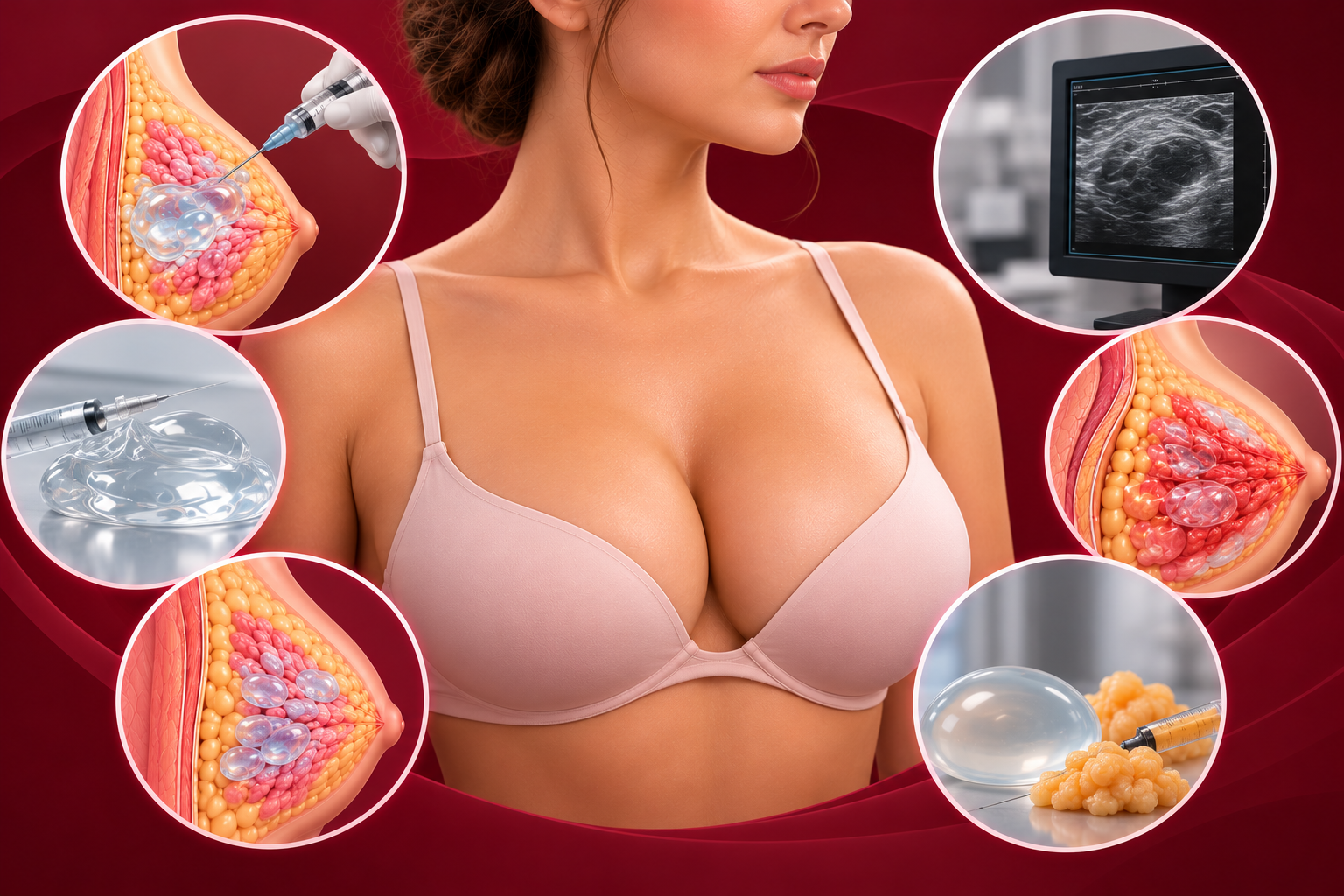
Face and breast are very different places to inject. This page is part of our guide to breast fillers.
A filler syringe usually holds around one millilitre. A noticeable breast increase involves volumes many times larger, often hundreds of millilitres per breast, meaning very large quantities of product. This raises costs, risks and the chance of complications.
A soft, large organ allows injected gel to shift or spread with movement, gravity and pressure. Lumps, irregularities and migration are more likely. Unlike a cohesive implant, the material does not stay as a single defined object.
With small amounts, a problem may be easy to treat. With large volumes, treatment is harder and may involve surgery. The material can be deep or dispersed, and not all fillers dissolve.
Injected material can appear on mammograms and ultrasound, and may be mistaken for abnormalities or hide real ones. See fillers and screening.
Compared with facial use, little long-term data exist on breast fillers, especially across years of screening and ageing.
Some professional bodies have expressed concerns about large-volume fillers in the breast. Some large-volume HA products once marketed for the breast have faced restrictions or withdrawal in some places.
The scale and nature of the breast make filler use there a different, higher-risk proposition.
Continue reading
Return to the full category guide.
Candidacy, risks and when to seek medical help.
Study findings, limitations and original publications.
The parent guide to approved uses and safety.
What HA products are and what they are approved for.
How injected material can affect mammograms.